



The permit problem almost never comes up during venue tours. It comes up three months later, when the couple discovers that the stretch of beach they want requires a county event permit, caps the guest list at seventy-five, and prohibits amplified sound after sunset.
Permits do not kill weddings. But they change them. Understanding the permit landscape for a venue before falling for it is one of the most consistently skipped steps in destination wedding planning.
Beach ceremonies, where most of the surprises happen
Public beaches are among the most photographed wedding backdrops in the country and among the most regulated. The beach itself is almost always public land, which means any organized event requires a permit from the county, the state park, or the national seashore that manages it.
The permit is usually obtainable. What couples miss are the conditions attached to it. Most beach permits cap guest counts, sometimes at fifty, sometimes at a hundred and fifty, occasionally at more. Most prohibit or restrict amplified sound, which shapes the ceremony music and the reception format. Many prohibit open flames and some prohibit alcohol on the sand entirely, which pushes the bar to a separate permitted space.
This plays out differently depending on where you are. In the Outer Banks, beach permits are issued through the National Park Service, which manages Cape Hatteras National Seashore. The process is established and manageable, but the sound and alcohol restrictions are real. On the Central Coast of California, beach access varies: some stretches are county-managed, some are state park land, and a few are accessible through private coastal ranches, which are the ones that bypass the public permit process entirely. Understanding which type of beach a venue actually accesses changes what the day can look like.
Explore the Outer Banks region
Explore the Central Coast region

National parks, the most competitive permits in wedding planning
National park weddings are one of the most sought-after categories in destination wedding photography and one of the most logistically constrained. The National Park Service issues Special Use Permits for weddings held on park land, and these permits are limited by location, by date, and by guest count. The parks do not issue many of them.
Some of the most in-demand parks for weddings have waitlists or competitive windows for the most desirable ceremony locations, and lead times of a year or more are common. Guest counts are capped, often at between ten and thirty for a ceremony at a scenic overlook. Amplification is typically prohibited, and structures like arches or draping or anything staked into the ground are usually not allowed either.
None of this is a reason to avoid national park weddings. It is a reason to understand what you are actually planning. A national park ceremony with fifteen guests and a quiet officiant is genuinely spectacular and achievable. A national park ceremony with two hundred guests, a string quartet, and a floral arch is a different kind of event that needs to happen somewhere else. The couples who do this well almost always keep the ceremony small and permitted, then move the reception to a nearby town or lodge property that can handle the full guest count.
Explore Jackson Hole / Teton Valley
Regional and state parks, the category couples overlook
Between the national parks and the county beaches sits a large middle category that couples often miss entirely: regional parks and state parks. These are managed by state or county agencies rather than the federal government, which means the permit rules are different in every state and sometimes in every county.
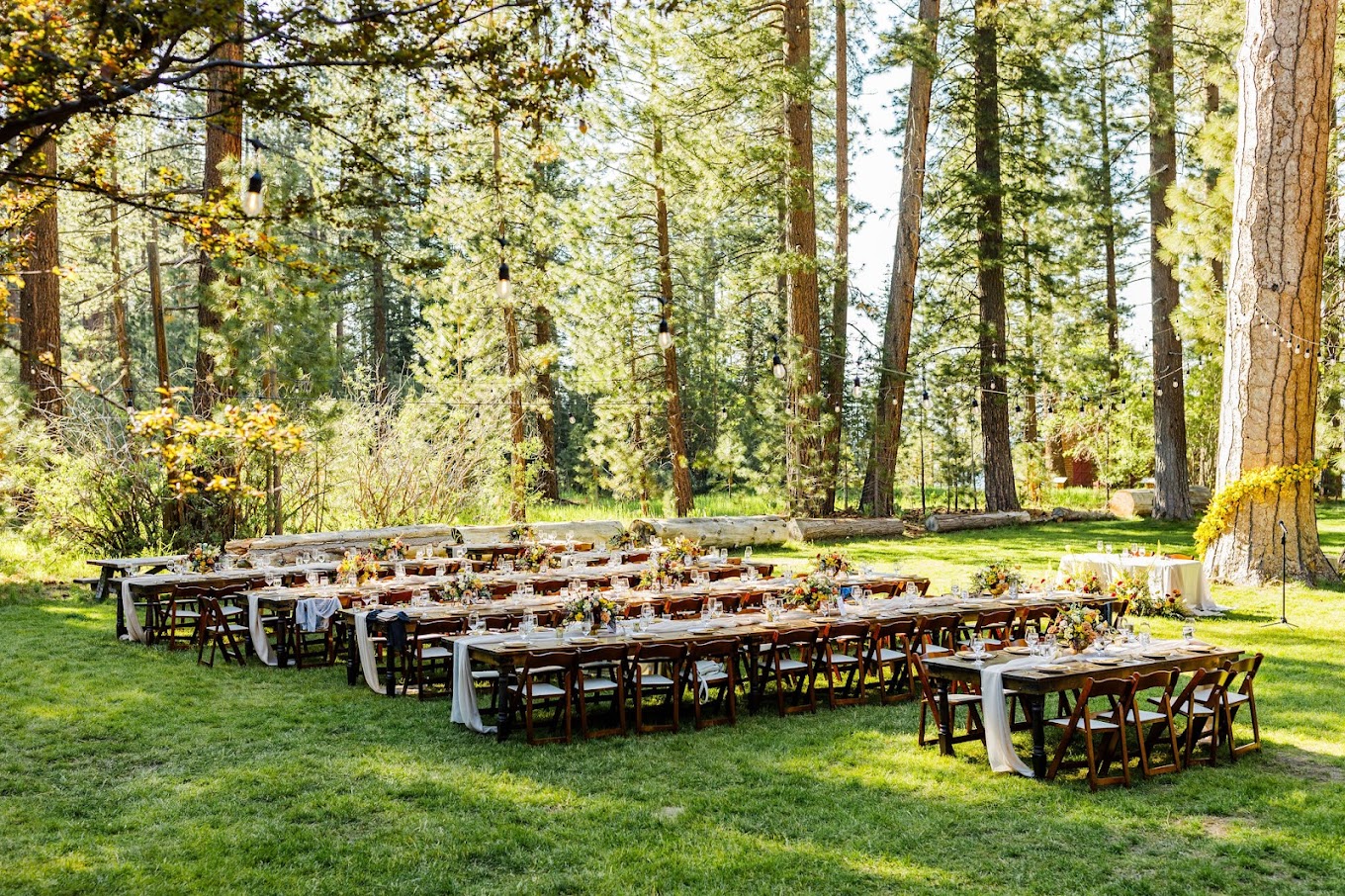
State parks in popular wedding regions often have permit programs that are more accessible than national parks, with higher guest count limits and occasionally more flexibility on sound and setup. The tradeoff is that these programs are less standardized and less well-documented online, so couples have to call the managing agency directly to understand what is possible. Lake Tahoe sits partly on national forest land, partly on state park land on the California side, and partly on Nevada state land, and the rules are different in each zone. Sedona's surrounding land is managed by the Coconino National Forest, which has its own special use permit program separate from the National Park Service permit system.

Historic sites and landmarks, the middle category
Historic venues occupy a different kind of middle space. They are private enough to bypass public land permits but often carry their own restrictions that function the same way.
A venue listed on the National Register of Historic Places may have preservation easements that restrict structural modifications, the placement of stakes, and anything that could damage the building or grounds. Vendors who work at historic venues often operate from approved lists, not because the venue is being difficult, but because certain catering equipment, audio setups, and lighting rigs have caused damage to irreplaceable surfaces in the past.
City-owned historic properties, like a municipal park pavilion or a public garden or a waterfront plaza, often sit in a middle space between private venue and public land. These sometimes require both an event permit from the city and compliance with the historic preservation office, which is two processes with two lead times and two sets of requirements.
The guest count problem is usually the permit problem
Most permit restrictions are written around guest count thresholds. Under a certain number, the rules are lighter. Above it, a different tier kicks in, sometimes including security requirements, insurance minimums, and vendor approvals.
This is where the permit problem quietly reshapes weddings. A couple planning for ninety guests at a beach ceremony discovers the permit caps at seventy-five. The solution is rarely to negotiate a larger permit. It is usually to either reduce the guest count or move the ceremony to a private permitted space and use the beach for photos only.
Lead time is the actual constraint
Every permit category has a lead time, and it is almost always longer than couples expect. Beach permits for popular summer weekends can go on a first-come basis and move quickly. National park permits for high-demand dates often open a full year in advance. City event permits for historic properties can take sixty to ninety days to process.
If a venue's appeal depends on public land or a historic designation, the permit timeline should be one of the first questions asked, before the deposit and not after.
How to check before you commit
The venue itself is the first resource. Any outdoor venue with real experience handling weddings on public or regulated land will have a clear picture of the permit process and the restrictions that come with it. If the venue contact cannot answer basic permit questions confidently, that tells you something.
The managing agency is the second resource. For national park land, the park's Special Use Permit office maintains current availability and rules. For public beaches, the county parks department or state park system holds the permit authority. For historic properties, the state historic preservation office can confirm any easements on the property. The time to do this research is before the venue tours, not after. It takes thirty minutes and changes which questions you ask when you walk through the space.
Frequently Asked Questions
Do all beach ceremonies require a permit?
Ceremonies on public beach land almost always require a permit. Ceremonies accessed through a private coastal property, like a ranch or a resort or an estate with private beach access, typically do not because the event is happening on private land. The key question is who owns and manages the sand where the ceremony will actually take place.
How early do national park wedding permits open?
It varies by park, but most high-demand locations open their permit windows a year in advance for peak season dates and some use a lottery for the most competitive spots. Checking directly with the park's Special Use Permit coordinator is the only reliable way to get current information.
Can I have a large wedding in a national park?
Not at the ceremony location on park land. National park permits cap guest counts, often at thirty or fewer for scenic overlook locations. The model that works is a small permitted ceremony inside the park and a full-scale reception at a nearby property outside park boundaries.
Does a venue permit cover both the ceremony and reception?
Usually not. A beach permit typically covers the ceremony location and its timeline, and a separate permit may be needed for the reception if it involves amplified sound, alcohol, or a structure. Most experienced destination wedding venues manage both processes and will walk couples through what is and is not covered.
Is it possible to lose a permit after it is issued?
It is rare but it happens. Permits can be revoked for violations of permit conditions, failure to meet insurance requirements, or changes that exceed the permitted scope. Guest count overages are the most common trigger. The couples who run into permit problems mid-planning almost always added guests after the permit was issued without notifying the issuing agency.