


All ten regions here score 9.6 or higher for scenery, and Jackson Hole, Kauai, and Big Sur tie at the top with 9.9.
Most share the same trade-offs: tight lodging, a small airport or a long drive from a big one, and permits for ceremonies on public land. Typical wedding costs run from $20,000 to $33,000 in Santa Fe to $42,000 to $70,000 on Maui.
The ten at a glance
Scenery score out of 10
- 01
Jackson Hole / Teton ValleyWyoming · $45,0009.9
- 02
KauaiHawaii · $56,0009.9
- 03
Monterey / Carmel / Big SurCalifornia · $55,0009.9
- 04
Aspen / SnowmassColorado · $52,0009.8
- 05
MauiHawaii · $56,0009.8
- 06
Moab / Southern UtahUtah · $39,0009.8
- 07
Santa FeNew Mexico · $27,0009.8
- 08
Sedona / Verde ValleyArizona · $37,0009.8
- 09
Telluride / OurayColorado · $47,0009.8
- 10
Charleston / LowcountrySouth Carolina · $35,0009.6
9.9/10 · SceneryNo. 1 · Wyoming
Jackson Hole and Teton Valley
- Typical wedding
- $45,000
- Weddings a year
- 1,600+
- Rainfall
- 13 in a year
- Setting
- Mountain · Countryside · City
Why it made the list
The Tetons and Yellowstone proximity deliver perhaps America's most spectacular mountain scenery.
Weather and season
Brutal long winters; prime summer-fall season is short.
Jackson Hole is a valley about fifty miles long, with the Tetons rising straight out of its western edge and Grand Teton National Park filling most of the view.
Weddings split among the town of Jackson, with its hotels and walkable square; Teton Village at the base of the ski resort; working ranches on the valley floor; and the park itself. Teton Valley, over Teton Pass in Idaho, faces the range from the west, and lodging in Victor and Driggs can cost about half as much.
Ceremonies inside Grand Teton National Park need a permit. Applications open each mid-December for the following year, cost $200, and the popular sites go within days, some capped at 25 people. The park's two chapels and concession lodges are exempt.
The challenge is cost and logistics. Guests should budget roughly $1,400 to $2,400 each for two nights, and summer room blocks need booking eighteen months out. The local airport is fifteen minutes from town but small and weather-sensitive, and Salt Lake City, four and a half hours south, is often cheaper.
Best wedding style: Ranch wedding, mountain-view ceremony, luxury lodge weekend, tented reception, intimate destination wedding.
What to avoid: Dates outside June through September. May is mud season, snow by late October is normal, and in winter most outdoor venues and much of the park are unavailable. Mid-September, with the aspens turning and crowds thinning after Labor Day, is the best stretch.
Featured venue
 9.9/10 · Scenery
No. 2 · Hawaii
Kauai
- Typical wedding
- $56,000
- Weddings a year
- 2,200+
- Rainfall
- 70 in a year
- Setting
- Coastal
Why it made the list
Na Pali Coast, Waimea Canyon, and lush jungle make Kauai arguably America's most dramatic island.
Weather and season
Year-round mild but the wettest of the main Hawaiian islands.
Kauai is the most visually dramatic Hawaiian island for weddings. It has the Na Pali Coast, Waimea Canyon, waterfalls, and rainforest, and it is smaller and less developed than Oahu or Maui, with the smallest lodging inventory of the main islands.
The two coasts get very different weather. Princeville and Hanalei on the north shore average around 85 inches of rain a year, while Poipu on the south shore averages 30 to 40 and has the island's largest resort and simplest logistics.
Kauai works best for 40 to 120 guests and gets harder above that, with smaller resort inventory and thinner vendor capacity. Past Princeville, the road crosses the one-lane Hanalei Bridge, whose 15-ton limit rules out coaches.
Most mainland guests connect through Honolulu to Lihue, the island's only commercial airport, and every guest needs a rental car. Ceremonies on state beaches need a DLNR permit, and most public beaches prohibit arches, chairs, and tables.
Best wedding style: Garden wedding, cliffside ceremony, beach-adjacent celebration, intimate resort wedding, private estate weekend.
What to avoid: A north shore wedding in the November to March wet season. December and January rain there can last for days, and the one-lane bridges past Hanalei have closed in past winters. April through June is the best stretch, and the south shore works year-round.
Featured venue
 9.9/10 · Scenery
No. 3 · California
Monterey, Carmel, and Big Sur
- Typical wedding
- $55,000
- Weddings a year
- 5,500+
- Rainfall
- 22 in a year
- Setting
- Coastal
Why it made the list
Big Sur's coastline is widely considered the most spectacular in the continental US.
Weather and season
Long mild Mediterranean season.
Monterey, Carmel, and Big Sur form the strongest coastal wedding region in the continental U.S.
Big Sur gives you cliffs, redwoods, Pacific surf, and fog. Carmel adds a walkable village of inns and restaurants, white sand, and cypress trees. Monterey is the practical base for hotel blocks and larger guest lists, and Carmel Valley, inland, is warmer, with vineyards and ranch venues.
May, June, September, and October are the strongest months. Summer often brings fog to Monterey and Carmel, while September and October tend to be clearer on the coast and warm in Carmel Valley without peak inland heat.
Big Sur is not an easy wedding destination. Its state parks issue elopement permits for ten people or fewer at hike-in sites, and at least one bans receptions, catered events, and seating. Road access can change, and lodging in Big Sur and Carmel is limited.
Best wedding style: Cliffside ceremony, redwood dinner, Carmel estate wedding, intimate coastal weekend, luxury elopement.
What to avoid: Large late-night transfers out of Big Sur. Guests should stay at the venue or in Carmel with shuttles planned. Most fly into SFO or San Jose, 90 minutes to two hours away, because Monterey's airport has limited service.
Featured venue
 9.8/10 · Scenery
No. 4 · Colorado
Aspen and Snowmass
- Typical wedding
- $52,000
- Weddings a year
- 2,500+
- Rainfall
- 17 in a year
- Setting
- Mountain
Why it made the list
Aspen's combination of alpine drama and cultural sophistication is unmatched in America.
Weather and season
Year-round wedding viable across summer alpine and winter ski seasons.
Aspen and Snowmass offer the most polished version of a mountain wedding in the U.S.
The two sit twelve miles apart at around 8,000 feet. Aspen is a walkable town of Victorian storefronts, historic hotels, and some of the best restaurants in the Rockies. Snowmass is a ski village with clustered lodging and lower room rates, and it usually handles guest lists over 100 better.
Gondola-access venues sit as high as 11,212 feet, and up to a third of guests feel the altitude, so ask them to arrive a day early. The gondola ride also caps how many guests can move per hour.
The downside is cost. Guests should expect $2,000 to $4,000 each for a winter weekend, and summer festivals push rates higher. Snowmass rooms cost meaningfully less, with a free bus to Aspen.
Best wedding style: Black tie mountain wedding, luxury resort weekend, private club reception, aspen grove ceremony, tented alpine dinner.
What to avoid: April, May, and early November, when lifts and many restaurants close. The season runs late June through September, and its last two weeks, with the aspens turning and the afternoon storms over, are the best.
Featured venue
 9.8/10 · Scenery
No. 5 · Hawaii
Maui
- Typical wedding
- $56,000
- Weddings a year
- 4,200+
- Rainfall
- 70 in a year
- Setting
- Coastal
Why it made the list
Among the most spectacular destinations in America with beaches, volcanoes, and Hana coast.
Weather and season
Year-round mild tropical weather.
Maui is really four climates on one island, and the drives between them are longer than the map suggests.
Wailea's resort lawns sit on the dry south coast. Kapalua, in the northwest, is greener, with cliffs and pineapple hills. Upcountry has ranch land and protea farms ten to fifteen degrees cooler than the coast, and Hana is three hours of curves from the airport.
Guests treat a Maui wedding as a week, not a weekend. Expect four to five nights and $2,500 to $4,500 per person with flights and a rental car, give eighteen months of notice, and offer a Kihei block next to Wailea, which costs a fraction of the resort rate.
Lahaina town's historic core remains restricted as rebuilding continues after the 2023 fire, while Kapalua, Kaanapali, Wailea, and Upcountry are open. On state beaches, permits cap most sites at 25 people and prohibit arches, chairs, and tables.
Best wedding style: Resort wedding, coastal ceremony, private estate dinner, open-air reception, intimate island celebration.
What to avoid: Splitting guests between Wailea and Kapalua, which are more than an hour apart. Pick one side, and tell guests to book a rental car with their flights, because Maui runs short of cars in peak season.
9.8/10 · SceneryNo. 6 · Utah
Moab and Southern Utah
- Typical wedding
- $39,000
- Weddings a year
- 4,500+
- Rainfall
- 12 in a year
- Setting
- Desert
Why it made the list
Arches, Canyonlands, and Zion deliver some of America's most otherworldly red-rock scenery.
Weather and season
Long mild seasons; summer heat can be severe.
Moab has Arches and Canyonlands within forty minutes, and its best wedding properties sit along the Colorado River between red rock walls.
Southern Utah is not one destination. Moab, Zion, Capitol Reef, and Lake Powell are hours apart, with Moab to Zion alone four and a half hours, so a guest list has to pick one.
Ceremonies in the national parks need a Special Use Permit. Arches charges $185 and wants the application at least 30 days ahead, and Canyonlands runs its own process. Larger guest lists usually hold the wedding at a private ranch and use the parks for portraits or a small permitted ceremony.
Most guests fly into Salt Lake City, three and a half to four hours north, or Grand Junction, about two hours east. A two-night weekend costs a guest roughly $900 to $1,600, less than the mountain destinations on this list.
Best wedding style: Desert elopement, small destination wedding, canyon ceremony, private dinner under the stars, modern earthy reception.
What to avoid: Summer ceremonies before evening. July and August routinely pass 100 degrees, and monsoon storms from late July can flood canyons. March through May and late September through October are the best months.
Featured venue
 9.8/10 · Scenery
No. 7 · New Mexico
Santa Fe
- Typical wedding
- $27,000
- Weddings a year
- 2,500+
- Rainfall
- 14 in a year
- Setting
- Desert
Why it made the list
Adobe architecture, high desert mountains, and unique cultural blend create one of America's most distinctive wedding settings.
Weather and season
Long mild seasons with mild summer days and cool evenings.
Santa Fe is the least expensive region in the top ten, with typical weddings at $20,000 to $33,000 and about 2,500 a year.
The setting is the city itself: adobe and Pueblo Revival architecture, historic chapels, Canyon Road galleries, courtyards, and mountain views.
Downtown near the Plaza is the strongest base for destination guests, Canyon Road suits intimate weddings and gallery dinners, and the resort properties north of town handle larger guest lists.
Santa Fe's airport has limited service, so many guests fly into Albuquerque, an hour south. The city sits at about 7,000 feet, nights run cool, and Indian Market and other festival weekends tighten hotel availability.
Best wedding style: Courtyard ceremony, candlelit dinner, historic chapel wedding, artful destination weekend, intimate estate reception.
What to avoid: July and August for an outdoor courtyard, with afternoon storms and peak travel demand. May, June, September, and October are the strongest months, and November and December suit candlelit chapel weddings.
9.8/10 · SceneryNo. 8 · Arizona
Sedona and Verde Valley
- Typical wedding
- $37,000
- Weddings a year
- 4,500+
- Rainfall
- 14 in a year
- Setting
- Countryside · Desert
Why it made the list
Red rock formations create perhaps America's most uniquely beautiful natural wedding backdrop.
Weather and season
Mild long seasons; very hot summers possible.
Sedona is a small, heavily visited desert town with more wedding demand than its roads comfortably absorb.
Cathedral Rock, Bell Rock, and the surrounding red rock are public, fragile, and crowded, and rules vary by land manager. Chairs, arches, amplified sound, and group ceremonies need a confirmed permit, and trailhead parking is limited.
For weddings over 50 guests, a resort, private estate, or Verde Valley property works better than a public site. Cottonwood and Cornville, in the Verde Valley, add wineries and more room for larger guest lists.
Phoenix's airport is two hours south, and Flagstaff has limited service. March, April, October, and early November are the strongest months, and from June through August heat and monsoon storms make exposed red rock sites hard to use.
Best wedding style: Red rock ceremony, resort wedding, private estate reception, desert elopement, Verde Valley vineyard celebration.
What to avoid: Splitting guests between Sedona and Cottonwood on a tight schedule. Sedona traffic is heavy, room blocks are limited, and the two are not interchangeable bases.
Featured venue
 9.8/10 · Scenery
No. 9 · Colorado
Telluride and Ouray
- Typical wedding
- $47,000
- Weddings a year
- 1,800+
- Rainfall
- 17 in a year
- Setting
- Mountain
Why it made the list
Telluride's box canyon setting is among the most dramatic in the Rockies.
Weather and season
Year-round options though winter logistics are challenging.
Telluride sits in a box canyon at 8,750 feet with one dead-end road in and out, and Ouray is an hour and a half away over a mountain highway.
The town is small enough to cross on foot in fifteen minutes, and a free gondola running until midnight links it to Mountain Village, where the biggest venues are. Ouray is a smaller former mining town with hot springs and waterfalls.
Getting there is the hard part. Telluride's airport, the highest commercial airport in the country, closes for weather often enough that guests should fly into Montrose, about ninety minutes north, and budget roughly $1,300 to $2,200 for a two-night weekend.
Telluride's bed base is small, with no overflow town nearby, and most guest lists stay in condos. Late September, when the aspens turn, books eighteen months out. Colorado allows self-solemnization, with no officiant or witnesses, which suits small ceremonies at altitude.
Best wedding style: Mountain ceremony, lodge reception, intimate destination weekend, historic venue dinner.
What to avoid: Ridge-top ceremonies on July and August afternoons, when thunderstorms build almost daily. Hold outdoor ceremonies in the morning or after six, and skip May, when much of the town closes.
9.6/10 · SceneryNo. 10 · South Carolina
Charleston and the Lowcountry
- Typical wedding
- $35,000
- Weddings a year
- 10,000+
- Rainfall
- 50 in a year
- Setting
- Coastal
Why it made the list
Cobblestone streets, plantation oaks dripping Spanish moss, and historic homes are unmatched.
Weather and season
Mild long shoulder seasons; humid summers and hurricane risk in late summer/fall.
Charleston is the only East Coast region in the top ten and, at more than 10,000 weddings a year, the busiest.
The Lowcountry gives couples cobblestone streets, pastel facades, wrought iron, courtyards, live oaks, Spanish moss, marsh views, historic homes, and waterfront estates. The Ashley River gardens and oak allées are 20 to 30 minutes from downtown, and Kiawah is a gated island where every guest and vendor vehicle needs a pass.
For a wedding on the peninsula, guests should stay downtown, which turns most of the transportation plan into a walk. Weddings at Waterfront Park or White Point Garden are capped at 25 people, couple included, and Sullivan's Island bans arbors, alcohol, and commercial photography on the beach.
The trade-off is popularity and heat. October and early November are the most competitive dates, and festivals in March, April, and late May fill downtown hotels. June through early September brings near-daily afternoon storms, and hurricane risk peaks from August into early October. Winter is the underrated season, with lower rates.
Best wedding style: Historic home wedding, courtyard ceremony, Lowcountry estate reception, waterfront celebration, winter candlelit wedding.
What to avoid: Spreading the weekend across downtown, an island, and a river venue. Downtown's narrow streets often fit only a fourteen-passenger van, and the shuttles can cost more than the flowers.
Featured venue

Honorable Mentions
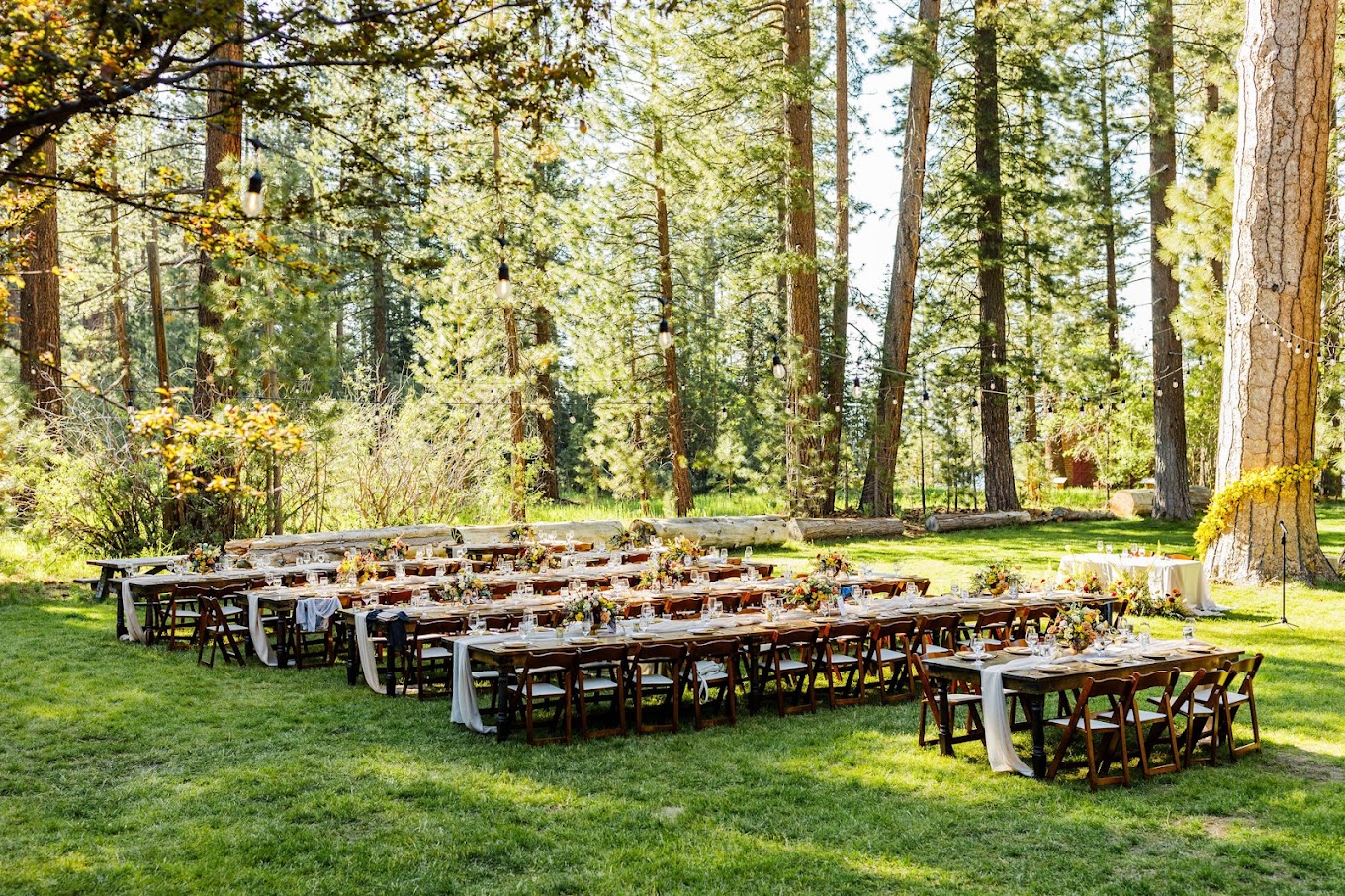
Lake Tahoe and Reno
Lake Tahoe scores the same 9.6 as Charleston and hosts more than 9,000 weddings a year.
The region combines alpine lake views, pine forest, granite boulders, ski resorts, and clear blue water. Reno is the practical anchor, with hotels, an airport, and easier guest movement, and Sacramento and SFO are alternatives.
Tahoe works well for resort weddings, lakeside ceremonies, private estate receptions, and smaller mountain celebrations. The lake spans California and Nevada, and the license must come from the state where the ceremony happens.
Best wedding style: Lakeside ceremony, mountain resort wedding, private home reception, pine forest portraits, winter ski weekend.
What to avoid: Underestimating seasonal demand. July and August bring crowds, lake traffic, and some years wildfire smoke, and ski season raises winter rates. June, September, and early October are the strongest months.
Midcoast Maine and Acadia
Midcoast Maine and Acadia offer the most rugged coastal scenery in the Northeast.
This region has granite shoreline, pine forest, working harbors, sailboats, historic inns, fog, rocky cliffs, and Acadia’s mountains-meet-sea landscape. Camden, Rockport, Rockland, and Boothbay Harbor are the easier bases, with inns, restaurants, and walkable harbors. Bar Harbor, the base for Acadia, is three hours or more from Portland.
Acadia National Park requires a permit for weddings, with a $125 nonrefundable application fee, except for simple ceremonies of up to 10 people. Larger weddings usually take portraits in the park and hold the reception at an inn, estate, or restaurant.
The challenge is seasonality. June and September are the best months, and July and August bring the heaviest lodging demand and Route 1 traffic. Lodging is tight, many guests stay in cottages or rentals, and Bangor's airport is small.
Best wedding style: Historic inn wedding, harbor ceremony, tented coastal reception, Acadia-adjacent celebration, intimate weekend gathering.
What to avoid: Scattering guests across inns and rentals in several villages. Blue Hill, Deer Isle, and Mount Desert Island weddings become shuttle puzzles, and rideshare is unreliable outside the larger towns.
Side by side
How the ten compare
Every score is out of 10. The highlighted column is the one this list ranks on.
| Destination | Affordability | Weather | Guest travel | Scenery | Venue options | Lodging | Logistics | Overall |
|---|---|---|---|---|---|---|---|---|
| 01Jackson Hole / Teton Valley | 3.2 | 5.8 | 4.8 | 9.9 | 7.4 | 5.6 | 8.0 | 63.9 |
| 02Kauai | 3.6 | 8.6 | 5.0 | 9.9 | 7.4 | 6.6 | 7.0 | 67.3 |
| 03Monterey / Carmel / Big Sur | 3.0 | 8.4 | 6.6 | 9.9 | 7.6 | 5.8 | 8.0 | 69.5 |
| 04Aspen / Snowmass | 1.6 | 7.0 | 4.6 | 9.8 | 8.0 | 5.8 | 8.0 | 65.1 |
| 05Maui | 2.8 | 9.4 | 5.4 | 9.8 | 8.0 | 7.4 | 7.0 | 69.6 |
| 06Moab / Southern Utah | 6.4 | 5.6 | 4.6 | 9.8 | 6.8 | 6.4 | 8.0 | 65.3 |
| 07Santa Fe | 5.6 | 7.6 | 5.4 | 9.8 | 8.0 | 7.0 | 8.0 | 71.6 |
| 08Sedona / Verde Valley | 5.4 | 6.6 | 5.6 | 9.8 | 7.4 | 6.6 | 8.0 | 68.7 |
| 09Telluride / Ouray | 3.0 | 6.4 | 3.4 | 9.8 | 7.4 | 5.0 | 8.0 | 62.2 |
| 10Charleston / Lowcountry | 3.8 | 6.4 | 7.4 | 9.6 | 9.4 | 7.8 | 8.0 | 72.5 |