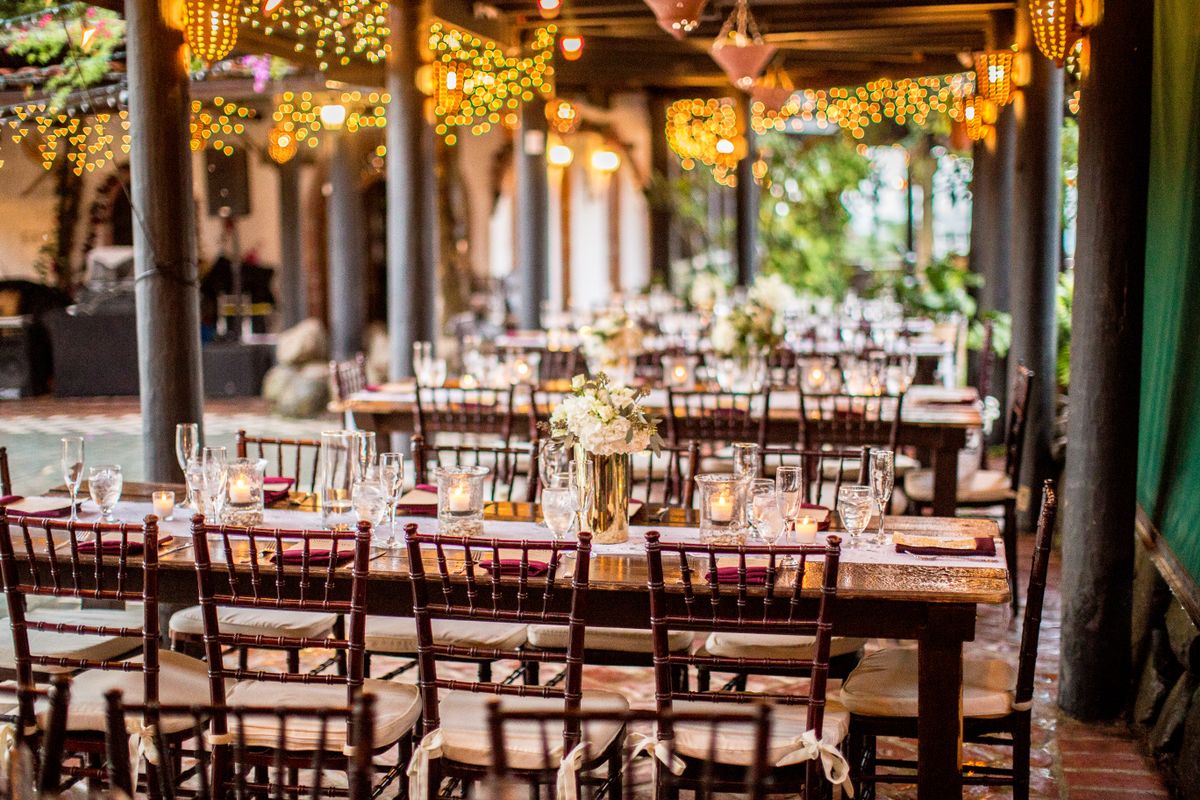



Ask what the average wedding guest count is and you will get a number. Ask what it means for your wedding and the number falls apart.
Every planning site quotes a figure somewhere between 100 and 130 guests, and that figure is real enough. It is also close to useless as a planning tool, because the spread behind it is enormous and the average sits in a part of the range where relatively few weddings actually land. A 60-guest dinner and a 220-guest ballroom reception are both entirely normal weddings. Averaging them produces a number that describes neither.
There is a better question, and almost nobody publishes the data to answer it: what size are the rooms? Because your guest count is not really set by a national statistic. It is set by your budget, and by what the venues where you want to marry were physically built to hold.
In short
The average U.S. wedding runs roughly 100 to 130 guests, but the useful range is far wider, and roughly 50 to 200 covers most weddings. Across the 1,528 venues in our database the median capacity is 250, with the middle half falling between 200 and 300. Your realistic number comes from two things: what your budget covers, and what the rooms in your chosen destination actually hold.
What the surveys actually say
National figures have hovered in the same band for the better part of a decade, and the median typically lands a little below the mean because a relatively small number of very large weddings pull the average upward.
That last detail is the one worth holding onto. When a distribution has a long tail, the average drifts away from the typical case. A handful of 300-guest weddings lifts the national average in a way that tells you nothing about whether your 90-guest plan is normal. It is.
The number nobody publishes: what the rooms hold
Here is the data we have that survey averages do not. Across the 1,528 venues our editors have hand-picked, capacity distributes like this.
| Percentile | Venue capacity |
|---|---|
| Smallest venue | 60 |
| 10th percentile | 150 |
| 25th percentile | 200 |
| Median | 250 |
| 75th percentile | 300 |
| 90th percentile | 400 |
| Largest venue | 900 |
The middle half of the venues on our shortlists seat between 200 and 300 people. Editors pick for quality rather than size, so that spread reflects what good wedding venues actually look like, and it sits well above the average couples are told to plan against.
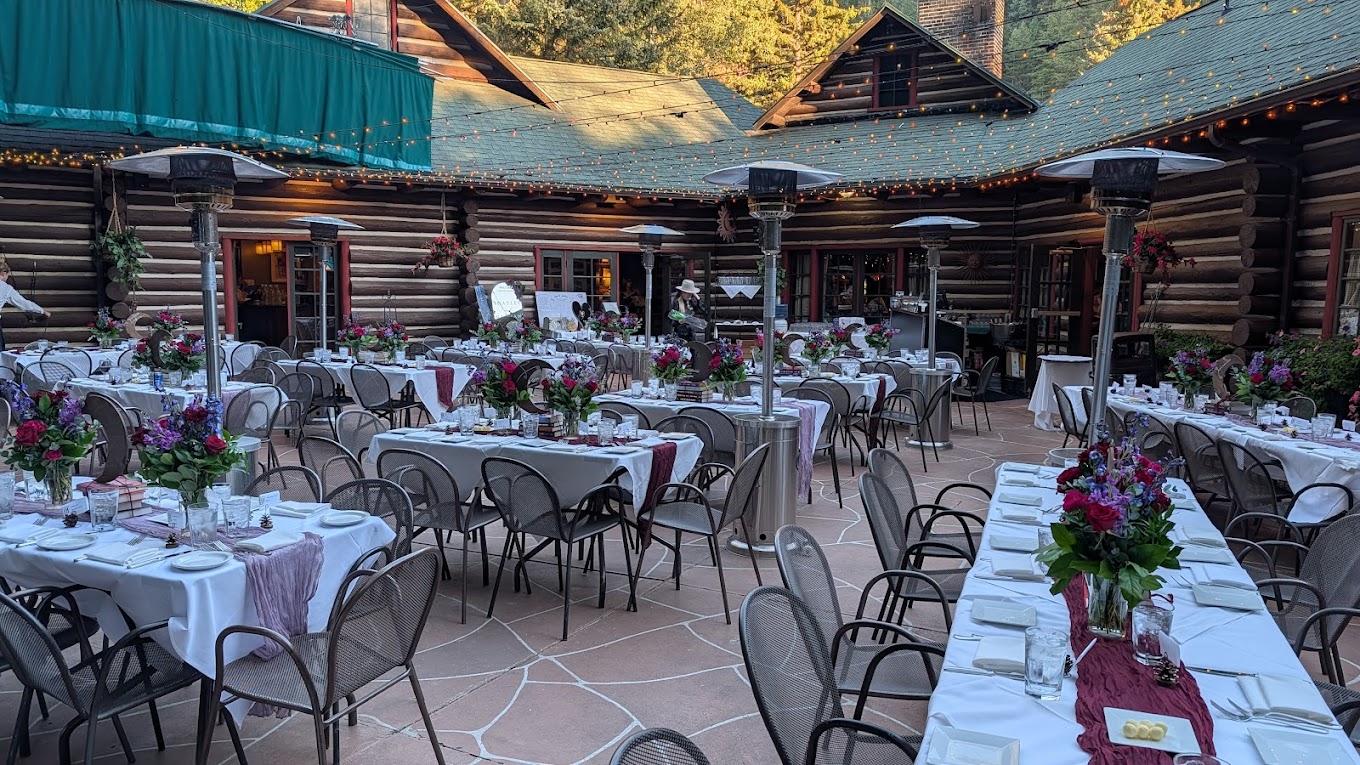
Which explains something couples run into constantly: a 100-guest wedding in a 250-seat room feels sparse, and fixing that means either spending on draping and floor plans to make the space feel intentional, or choosing a smaller venue in the first place. The average guest count and the average venue were not designed for each other.
Your guest count is not set by a national statistic. It is set by your budget and by what the rooms in your destination were built to hold.
Why your destination sets your number more than any survey
This is where the average really breaks down. Venue inventory is not evenly distributed, and the difference between destinations is dramatic.
Take two destinations a couple might realistically weigh against each other. In the San Juan Islands, the largest venue our editors found worth recommending holds 250 guests. In San Francisco, the largest holds 900. Same country, same year, same couple, and a 180-guest wedding is routine in one and close to impossible in the other.
| Destination | Median capacity | Largest venue |
|---|---|---|
| San Francisco | 350 | 900 |
| Chicago | 300 | — |
| Miami | 275 | 400 |
| Napa Valley | 250 | 400 |
| Taos / Northern New Mexico | 150 | — |
| San Juan Islands | 135 | 250 |

Destination · Washington
San Juan Islands
The San Juan Islands deliver a true Pacific Northwest island experience with whale watching, evergreen forests, and Salish Sea views. Ferry logistics and short season req…
View San Juan Islands spotlightThat is a two-and-a-half-times spread in what counts as a normal-sized wedding, driven entirely by what exists to book.
Place type predicts room size
Group those same shortlists by the kind of place they sit in and a clear pattern emerges.
| Place type | Median capacity | Share seating 200+ |
|---|---|---|
| Urban | 250 | 80% |
| Coastal | 250 | 74% |
| Desert | 250 | 70% |
| Rural | 200 | 67% |
| Mountain | 200 | 66% |
Cities and coastlines are built for volume: hotels, ballrooms, restored industrial spaces, museums. Mountain and rural destinations run smaller, because the inventory is lodges, barns, ranches, and inns, and those buildings were not designed around 250-person seated dinners.
The practical read: if your guest list is over 200, you have not just picked a wedding size, you have narrowed your map. Only about a third of the venues we track seat 300 or more, and in mountain destinations that share drops further.
Wine country deserves its own note here. Across Napa, Sonoma, the Willamette Valley, and Walla Walla, the median venue holds around 212 guests, which surprises couples who assume vineyard weddings scale easily. Many of the most photographed properties are working farms with real constraints on parking, restrooms, and power, and those constraints cap the guest list well before the view does.
See the destinations with the deepest venue options
The gap between who you invite and who comes
One more reason your number will differ from any average: the guest count you plan and the invite list you send are different numbers.
Attendance typically runs about 75 to 85 percent for a local wedding where most guests can drive and sleep in their own beds. For a destination wedding requiring flights and hotel nights, 55 to 65 percent is the more realistic band. A 150-name invite list can seat 90 people, and the difference determines both the room you need and the catering total you should be budgeting for.
Couples who plan the venue around the invite list rather than the expected attendance routinely end up in a space that is too large, paying a food and beverage minimum for guests who were never going to fly.
Estimate your real headcount with the guest list planner
So what should your number be?
Work from two directions and meet in the middle.
From the budget side, work out what your money actually covers once fixed costs are paid. For most couples that is the binding constraint, and we walk through the arithmetic in detail separately.
From the room side, check the median venue capacity where you want to marry before you fall in love with a number. If you are drawn to the San Juan Islands or a mountain town, a 200-guest plan is fighting the inventory. If you are marrying in a city, the rooms will hold whatever you bring, and budget becomes the only real limit.
Run the budget math on your guest count
If your number lands under 50, see the venues built for it
Find destinations where your guest count actually fits
Frequently Asked Questions
What is the average wedding guest count in 2026?
Roughly 100 to 130 guests, depending on the survey. The median tends to sit a little lower than the mean because a small number of very large weddings pull the average up. A more useful planning range is 50 to 200, which covers the large majority of weddings.
What is the average number of guests at a wedding by venue size?
Venue capacity and actual guest count are different things, and the gap is bigger than most couples expect. The median venue on our editors' shortlists seats 250, well above what the average wedding actually brings. Most weddings are held in rooms considerably larger than the wedding itself.
How many guests should I have at my wedding?
Take your total budget, subtract $12,000 to $20,000 of fixed costs, and divide the remainder by roughly $225 per guest. Then sanity-check that number against the venues in your destination. If your budget says 180 but the median venue where you want to marry holds 135, the destination is the thing that has to give.
How many guests for a Miami wedding?
Miami is comfortable for mid-to-large weddings. The median venue we track there holds 275 guests and the largest holds 400, while a typical Miami wedding runs $27,000 to $44,000. At that budget most couples land somewhere between 90 and 140 guests, which fits the inventory easily and leaves real choice on venue style.
Is 50 guests too few for a wedding?
No. Small weddings are common and increasingly deliberate, and 50 guests puts you above the smallest venues we track. The practical issue is not whether 50 is acceptable, it is whether the venue is sized for it. A 50-guest wedding in a 300-seat ballroom will feel empty, and a food and beverage minimum written for 150 will make it expensive per head.
Does a bigger guest list cost more per person?
Usually less, up to a point. Fixed costs spread across more people, so the per-guest average falls as the count rises. That advantage disappears once you hit the venue's capacity or its minimum spend, after which each additional guest is pure marginal cost with no offsetting saving.